Attic insulation does not wear out on a schedule. It needs replacing when its condition says so. Here are six signs to check, how to tell replacing from adding more, and what to do first.
Estimate guaranteed in writing
for a full calendar year.
Most attics fall into one of two groups. Every attic is different, so treat this as a starting point.
Rodents use insulation for nesting. Look for droppings, shredded material, tunnels or trails, and a sharp urine smell. Droppings and urine stay in the insulation. New insulation on top buries them, but they are still there.
Look for dark stains on the insulation, the rafters or the roof deck. Look for clumps that feel damp, and a musty smell. The cause might be a roof leak, a plumbing leak or an AC drain line. Fix the source of the water first. Insulation that got soaked or turned moldy usually has to go.
Fluffy insulation works by trapping air. Squash it flat and it traps less. Foot traffic, stored boxes and water can all flatten it.
ENERGY STAR says that if insulation is level with or below the floor joists, you should add more. For climate zone 2, which includes Houston, its retrofit levels are R-49 for an uninsulated attic and R-38 if you already have about 3–4 inches. Low depth alone often means adding more, not removal. But if what is there is also matted or dirty, replacing it may be the better fix.
Some rooms run hot or cold while others feel fine. Bare spots and uneven coverage can be one cause. Ducts, windows and the roof can be causes too. We look at the attic and tell you if it looks like something else.
Age alone is not the test. Condition is. But old attics can hold mixed layers, leftover debris, or loose fill nobody can name. One kind needs extra care: vermiculite. See the safety section below.
It is tempting to blow a fresh layer over the old one. For dry, clean insulation, that can work. For damaged insulation, it hides the problem.
Doing it in order gives you a clean attic and a base you can see.
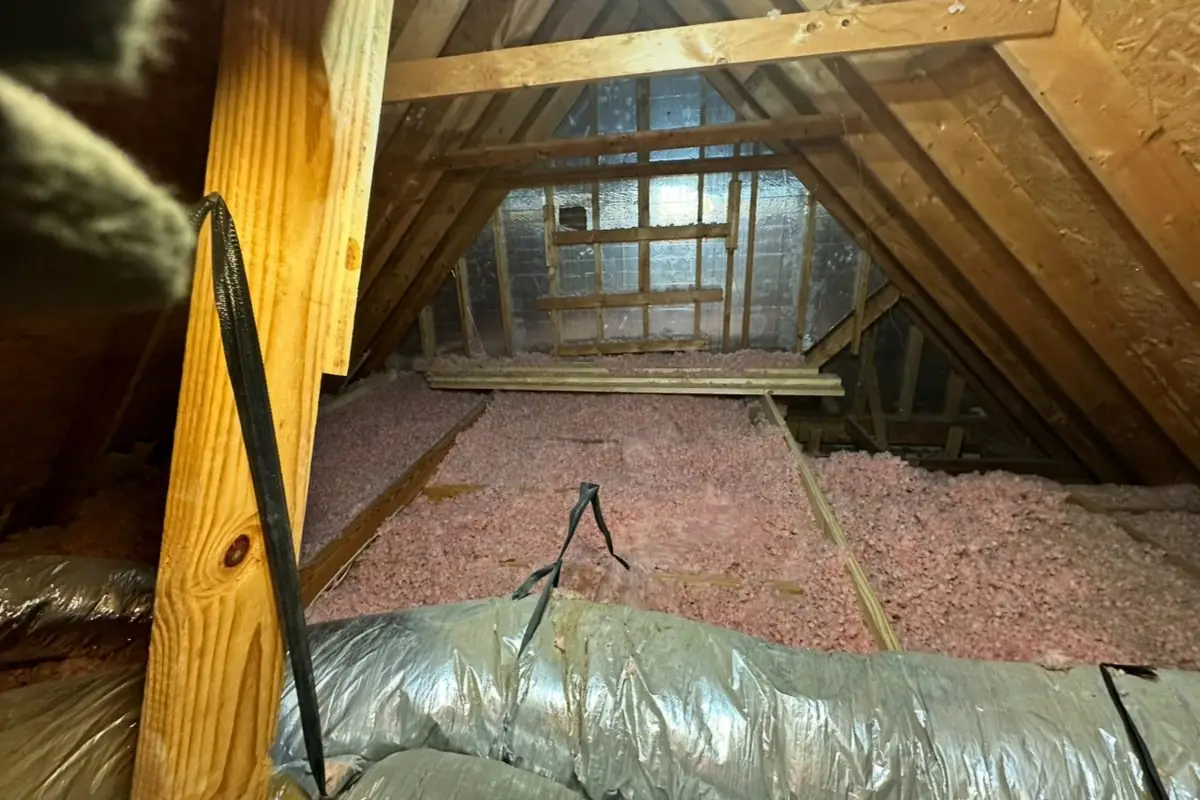
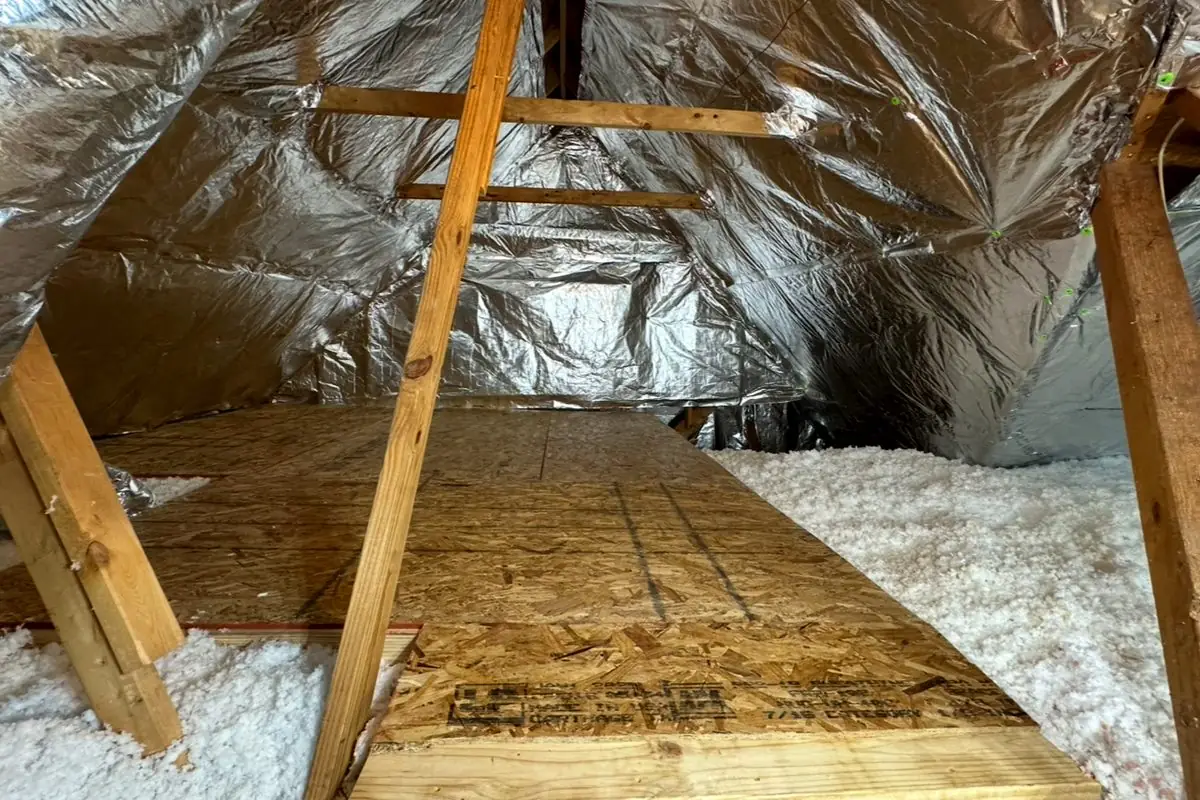 BeforeAfter
Removal can be booked on its own, but new blow-in insulation usually goes in on the same visit. An empty attic has nothing slowing the heat, and Houston attics reach ~140°F in summer. With the attic clear, it is also an easy time to add a radiant barrier. Read more about attic insulation removal.
Pulling insulation out of an attic is hot, dusty work, and it has real health risks. If you still want to look around, keep these in mind:
Vermiculite insulation looks like loose, pebble-like granules, gray-brown or silver-gold. Some of it was contaminated with asbestos. The EPA says to assume it contains asbestos and not to disturb it.
Do not sweep it, scoop it, bag it or vacuum it. Keep trips into the attic few and short, and avoid storing boxes up there. If you want to know for sure, ask a trained asbestos professional to test it. The EPA says to hire a professional asbestos contractor if you plan to remodel or do renovations.
We go up, photograph what is there, and give you a straight answer: remove and replace, or add more. If something looks like it needs a specialist, we will say so.
The visit is free and there is no obligation. You get a written quote guaranteed for 12 months. Our in-house crews do the work, with no subcontractors. We are Houston-based, with 5.0 stars from 74 Google reviews. See how we work as an attic insulation contractor in Houston.
Look at its condition. If it is dry, clean and fairly even, adding more is often enough. If it is wet, moldy, matted flat, or has droppings in it, it usually has to come out first. A free attic assessment gives you a straight answer, with photos.
There is no single date when attic insulation stops working. Condition matters more than age. Water, pests and being squashed flat are what damage it. Dry, clean insulation that still covers the attic evenly can often stay.
Sometimes. If the old insulation is dry, clean and fairly even, new insulation can often go on top. If it has droppings, water damage or mold, new insulation would only cover the problem. Then the old material should come out first.
It is hard, hot and dusty work, and there are health risks. You need eye protection, gloves, long sleeves and a well-fitted respirator or dust mask. Droppings and suspected asbestos call for extra care. See the safety section above, and think about asking a professional.
Stop and do not disturb it. The EPA says to assume vermiculite insulation contains asbestos. Do not sweep, scoop or vacuum it, and keep trips into the attic few and short. If you want to confirm what it is, ask a trained asbestos professional to test it. If you plan any work, hire a professional asbestos contractor.
This article is general information, not a diagnosis of your attic. Only an in-person look can tell you what yours needs.
Find out free, with photos of your own attic and a written quote guaranteed for 12 months.
 Stone
Stone